
How to Spot an AI Opportunity in Your Business

Most business owners do not lack interest in AI. They lack a clear way to figure out where it actually applies to them.
The general advice tends to be unhelpful. Try it and see. Look for repetitive tasks. Automate what you can. These things are technically true but practically useless without a way to evaluate your own situation.
Here is a more structured way to think about it.
Start With Frustration, Not Technology
The best AI opportunities almost always announce themselves through frustration.
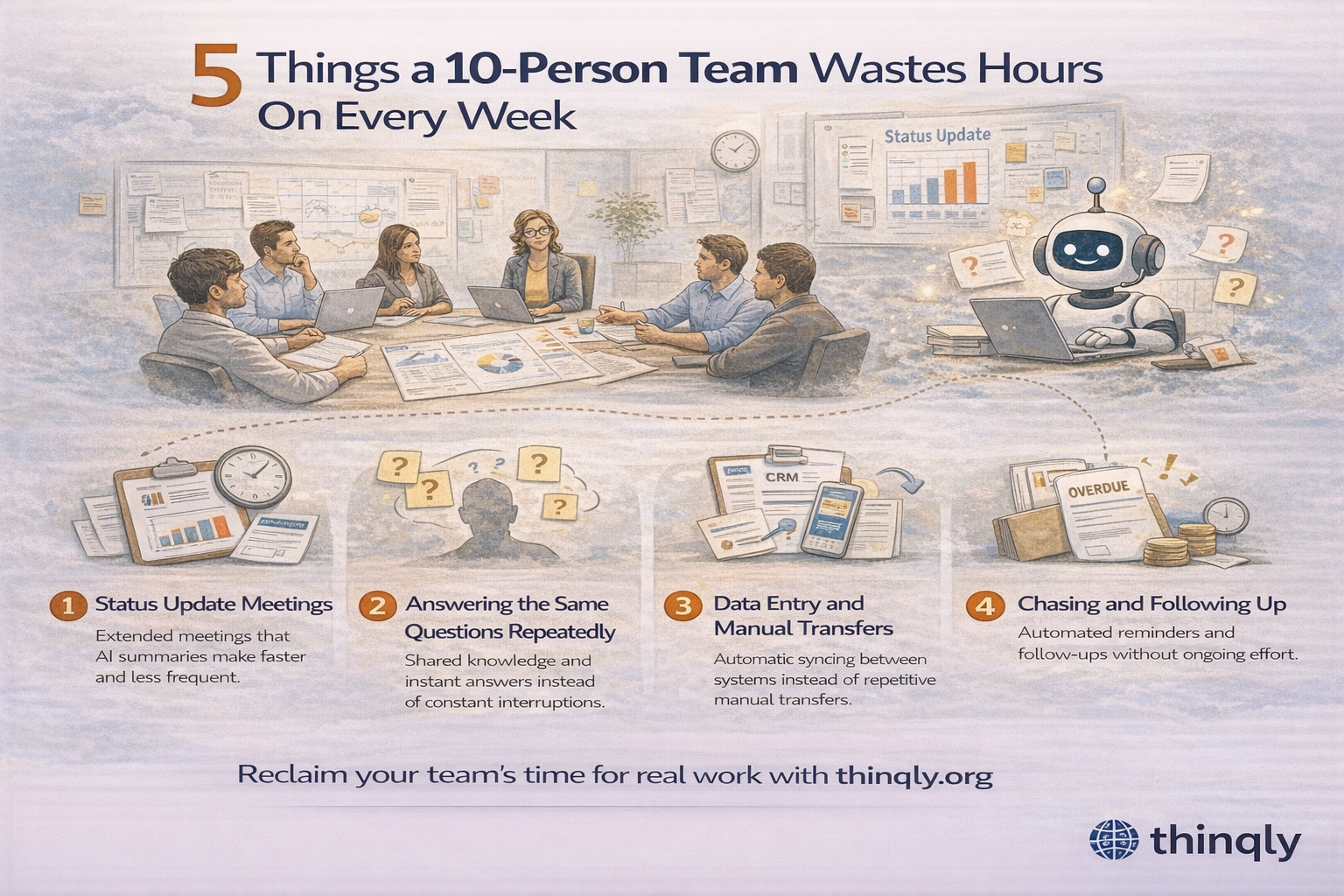
Think about the tasks in your business that consistently slow things down, that you find yourself doing repeatedly without any variation, that feel like they should not require your attention but somehow always end up on your plate.
These are the signals worth paying attention to. Not because frustration is a perfect diagnostic tool, but because it points directly at friction. And friction is exactly where AI tends to have the most impact.
The Three Questions Worth Asking
Once you have identified a task or process that feels like a candidate, three questions help clarify whether it is a genuine AI opportunity.
First, is this task repetitive? Does it follow a predictable pattern, or is it genuinely different every time? AI handles repetition well. It handles genuine novelty less well.
Second, is the cost of a mistake acceptable? AI is accurate but not perfect. If a small error in this task has serious consequences, the approach needs to account for that, usually through a human review step. If a minor error is low stakes, the risk calculus is different.
Third, how much time is this actually taking? It is worth being honest here. Tasks that feel burdensome sometimes take less time than we think. The best AI opportunities are the ones where the time investment is real and recurring, not just occasionally annoying.
What a Good Opportunity Looks Like
A genuine AI opportunity tends to have a few things in common.
It is something that happens regularly, at least weekly if not daily. It follows a consistent enough pattern that you could describe the steps to someone else. It takes meaningful time, either in a single block or cumulatively across many small instances. And solving it would free up time or capacity that could go somewhere more valuable.
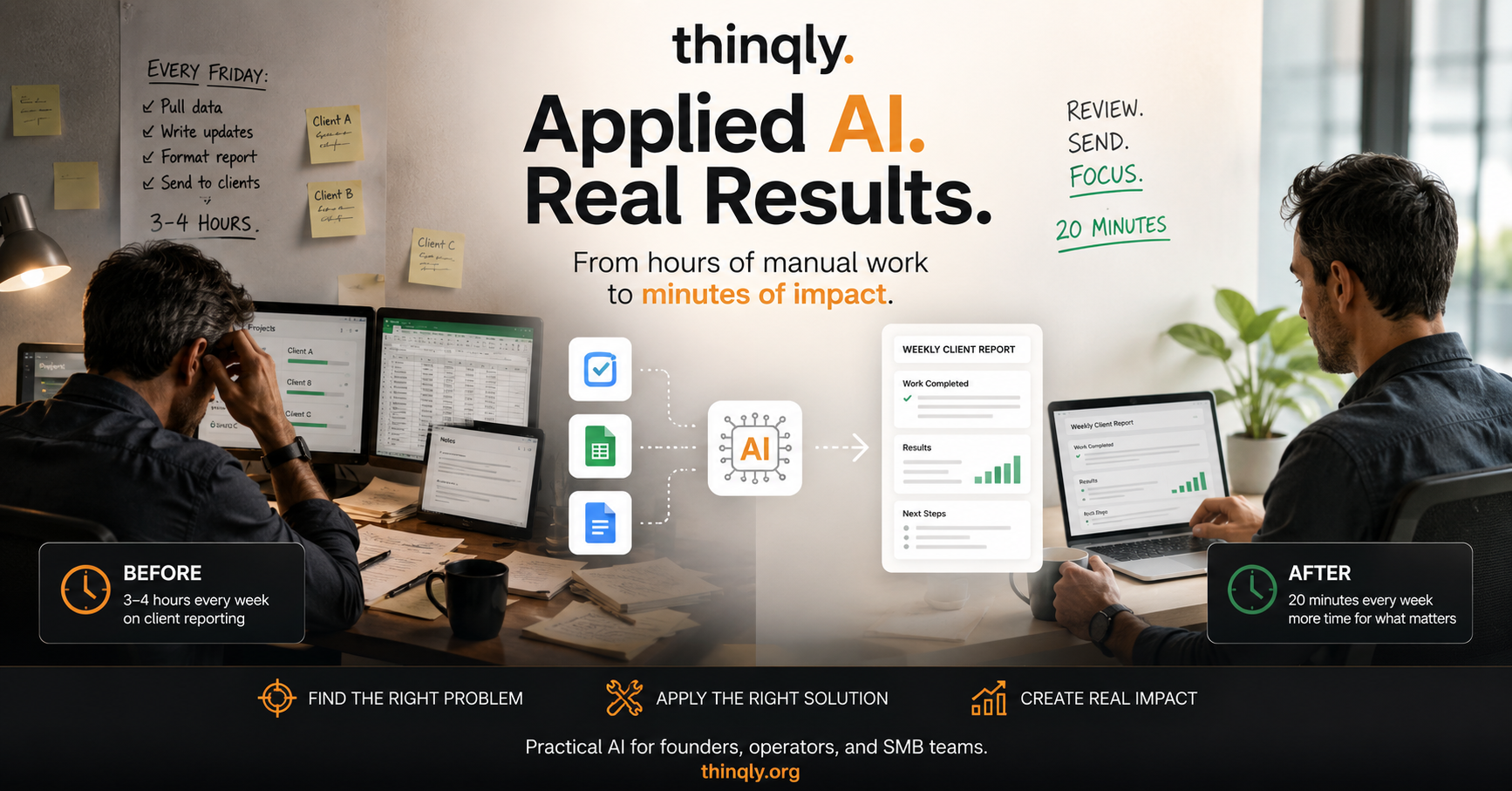
The clearest examples tend to be things like responding to common customer questions, generating recurring reports, following up on outstanding invoices, processing and organising inbound information, or creating documents from established templates.
If a task fits most of those criteria, it is worth exploring seriously.
The Gap Between Identifying and Implementing
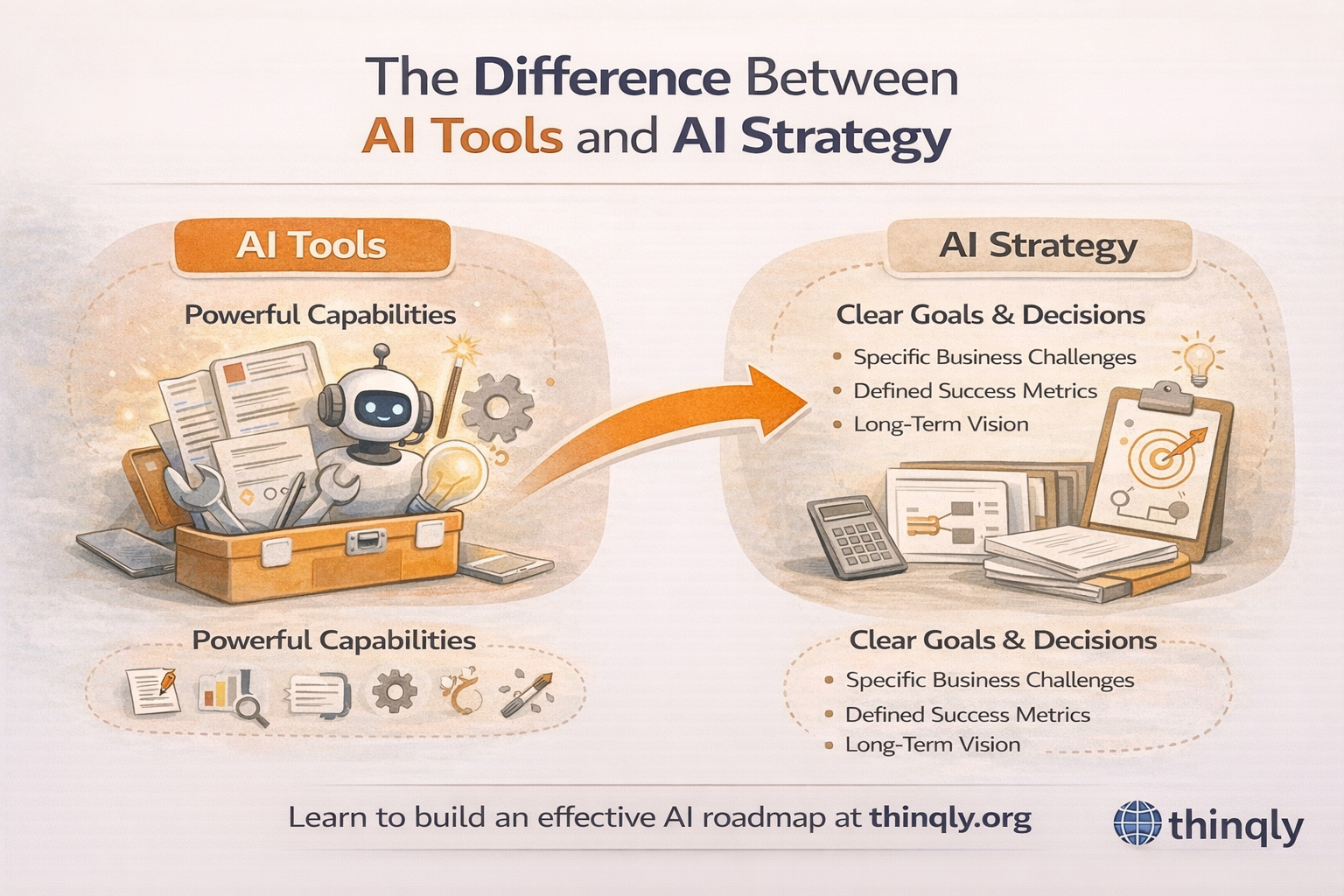
Spotting the opportunity is the first step. What comes after is where most businesses need support.
Translating a business problem into a well-configured AI solution requires a different kind of thinking than most people have had reason to develop. Which tools are actually suited to this problem. How to configure them for your specific context. How to integrate them into existing workflows without creating new complexity. How to measure whether it is actually working.
These are not impossible questions. But they are questions where the right guidance saves a significant amount of time and prevents a significant amount of frustration.
Book a free 1:1 Consultation at thinqly.org and we will walk through your business together, identify your highest-value AI opportunity, and help you understand what it would take to act on it.
Or join a Free AI Workshop to practice this kind of thinking with real business examples in a structured setting.
The opportunity is probably already in front of you. It just needs to be named.
Thinqly is a practical AI partner for founders, operators, and SMB teams. We help you understand, adopt, and apply AI to the problems that actually matter in your business.