
The Hidden Cost of Running Your Business Manually in 2026

Most small business owners know they are busy. What they do not always know is how much that busyness is actually costing them.
Not in stress. Not in missed weekends. In real, measurable hours that quietly drain revenue, capacity, and growth every single week.
This is the cost nobody talks about because it never shows up as a line item on your P&L.
The Work Behind the Work
Think about a typical week in your business. Beyond the actual work you deliver to clients or customers, there is another layer running underneath it constantly.
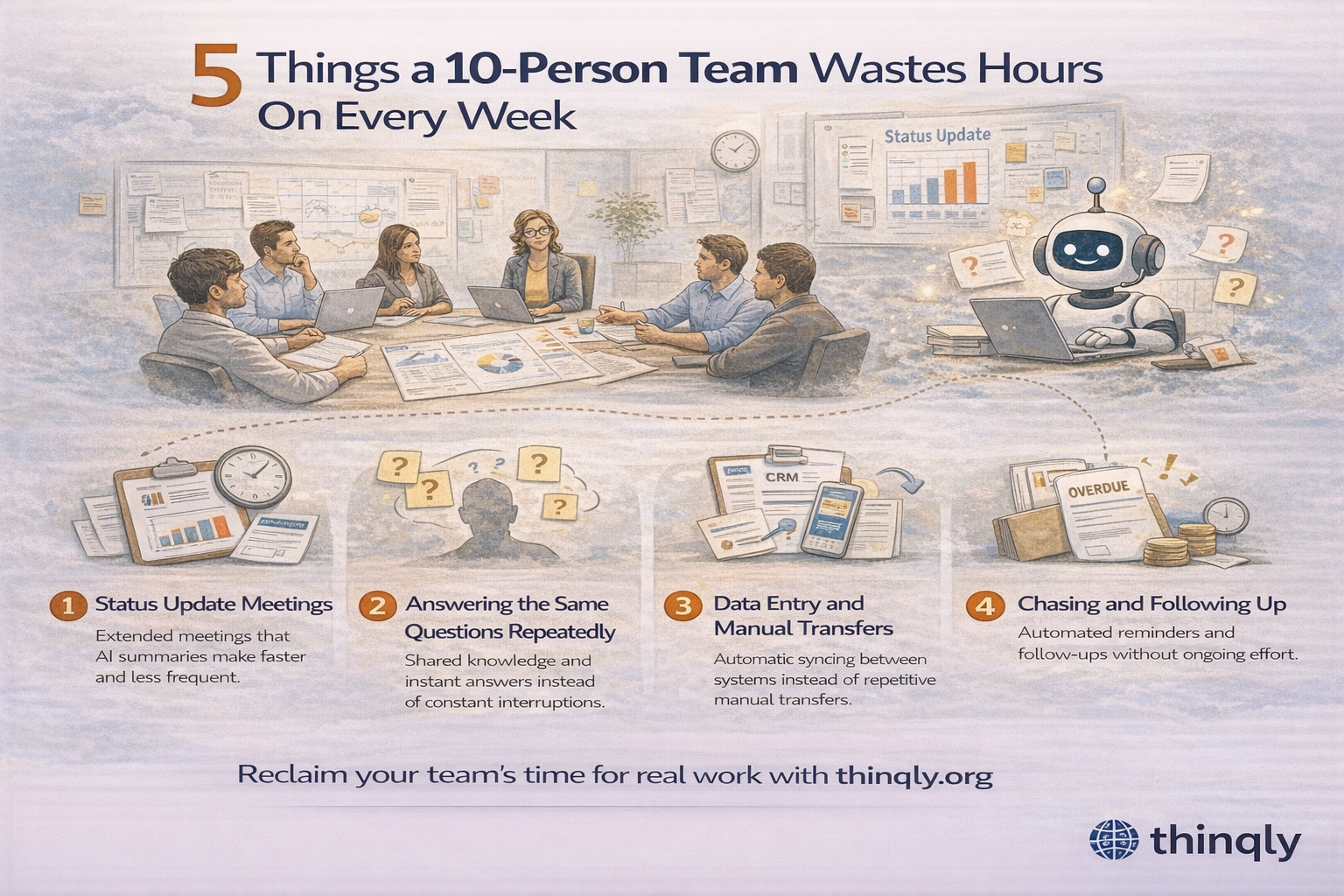
Emails that need responses. Invoices that need to be sent and followed up on. Reports that need to be pulled together. Scheduling that goes back and forth four times before anything gets confirmed. Data that needs to be copied from one place and pasted into another.
None of this is the work your business exists to do. But it takes just as long. Sometimes longer.
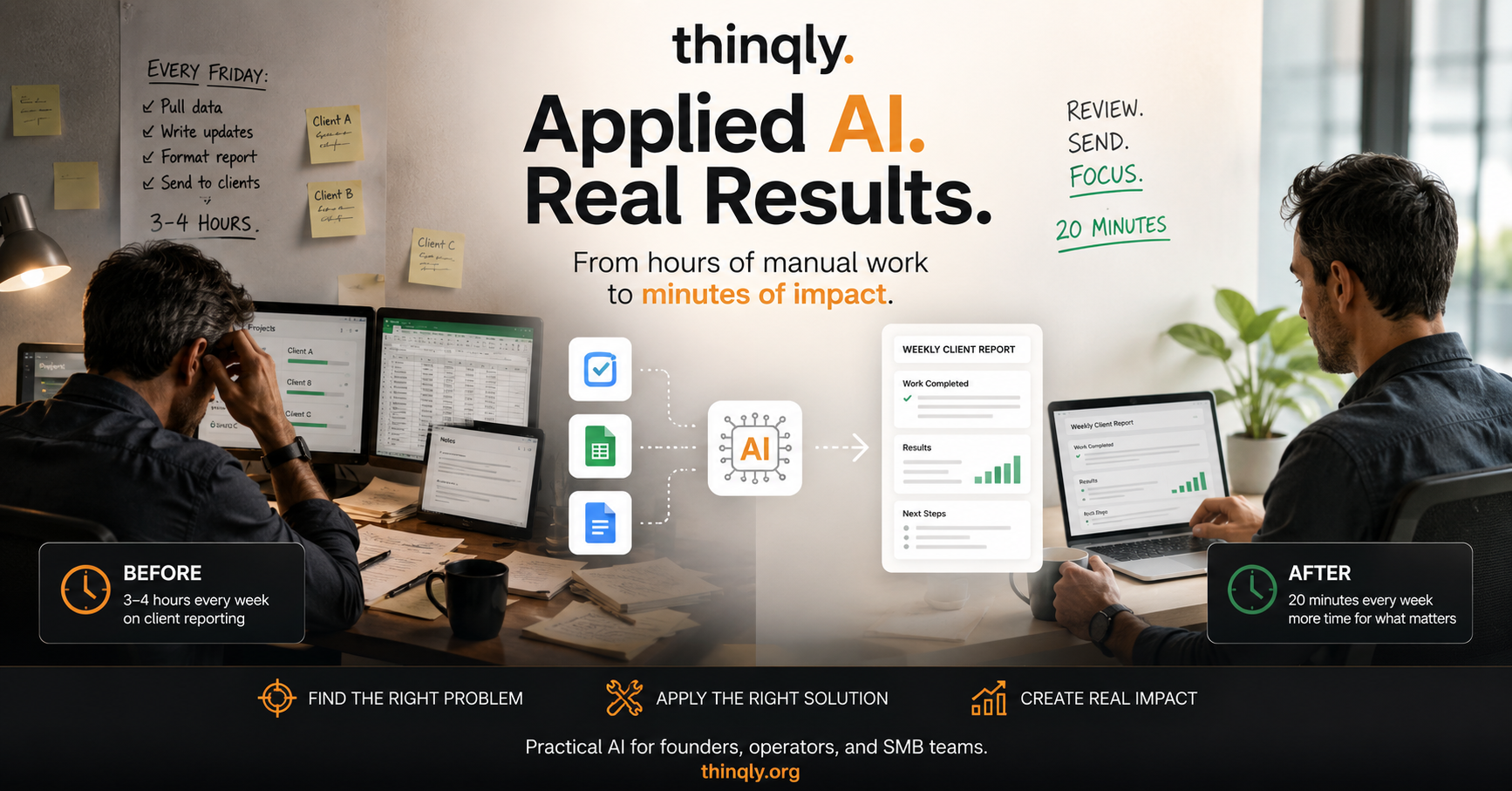
For most small business owners and founders, this invisible layer of operational work consumes anywhere from 15 to 25 hours per week. That is the equivalent of a part-time employee, except you are the one doing it, and you are doing it on top of everything else.
The Real Price of Manual Operations
Here is where it gets expensive.
If your time is worth $100 an hour and you are spending 20 hours a week on manual operational tasks, that is $2,000 a week in lost capacity. Over a year, that is over $100,000 in time that could have gone toward growth, client work, or simply running a less exhausting business.
Most businesses do not think about it this way because the cost is invisible. Nobody sends you an invoice for the two hours you spent reformatting a report on a Tuesday afternoon. It just disappears.
But invisible does not mean free.
Why Hiring More People Is Not Always the Answer
The instinct when operations get overwhelming is to hire. Bring in an assistant. Delegate more. And sometimes that is exactly the right move.
But hiring before you have fixed your underlying workflows just scales the problem. You end up onboarding someone into a set of manual, inefficient processes and paying them to do what a well-applied AI tool could handle in seconds.
The businesses that scale well do not just add headcount when things get hard. They first ask whether the work being done actually needs a human to do it at all.
A lot of the time, it does not.
What This Actually Looks Like in Practice
The manual tasks eating most businesses alive tend to cluster in the same areas.
Customer communication: responding to common questions, following up on leads, sending status updates. Operations: scheduling, data entry, tracking, reporting. Content and admin: summarising meetings, drafting emails, creating documents from templates.
These are not complex problems. They are repetitive ones. And repetitive problems are exactly where AI works best, not as a replacement for human judgment, but as a way to handle the volume so human judgment can be used where it actually matters.
The Shift Worth Making
The businesses pulling ahead right now are not necessarily working harder or hiring faster. They are working on fewer things because AI is handling the rest.
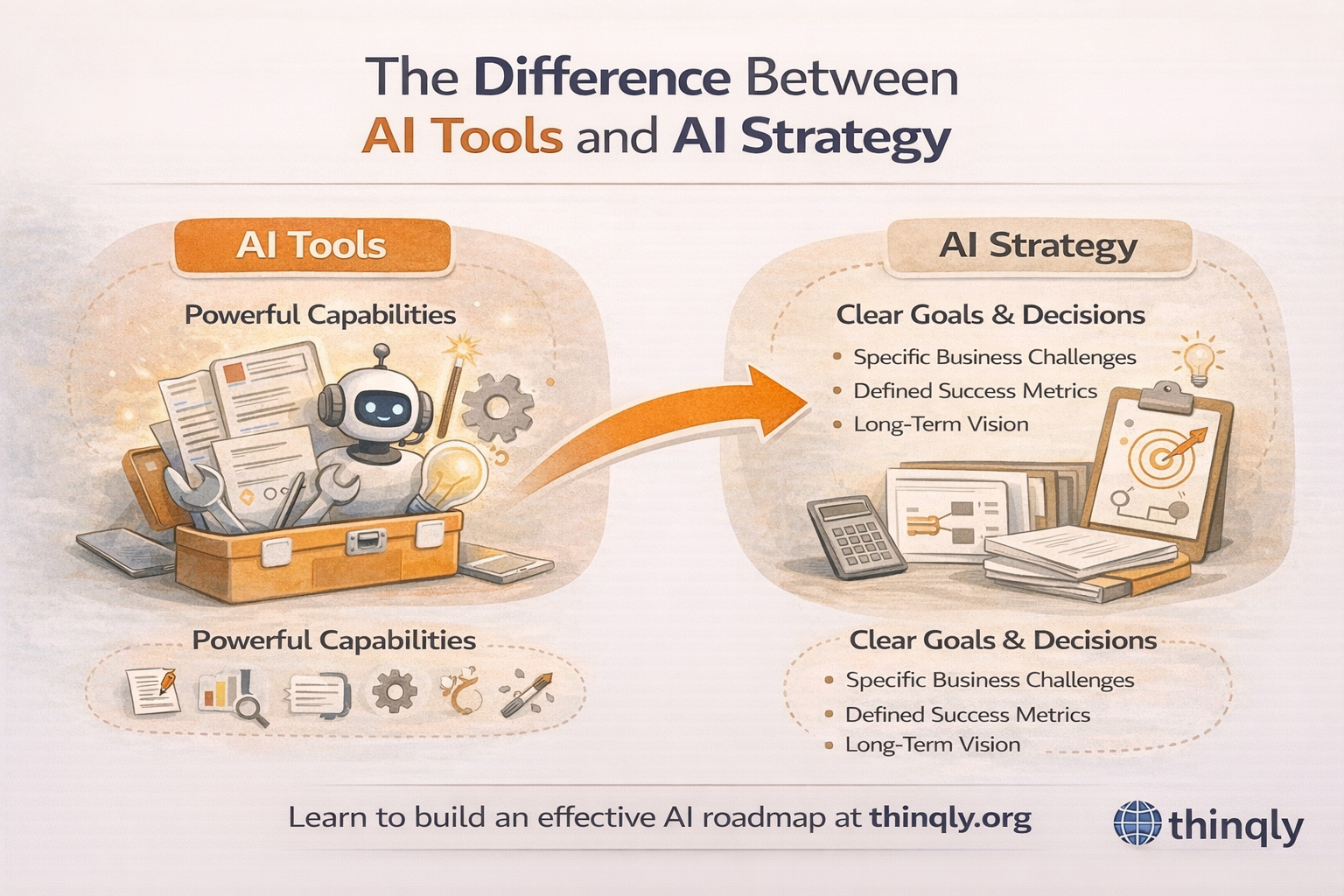
That shift does not happen by buying a tool and hoping for the best. It happens when you get clear on exactly where your time is going, identify which of those tasks are genuinely repetitive, and apply the right solution to the right problem.
That clarity is harder to find than most people expect. But it is also where the biggest wins live.
If you want to find out where your business is losing the most time, book a free 1:1 Consultation at thinqly.org. We will help you map the manual work, identify the highest-value opportunities, and figure out what AI can realistically take off your plate.
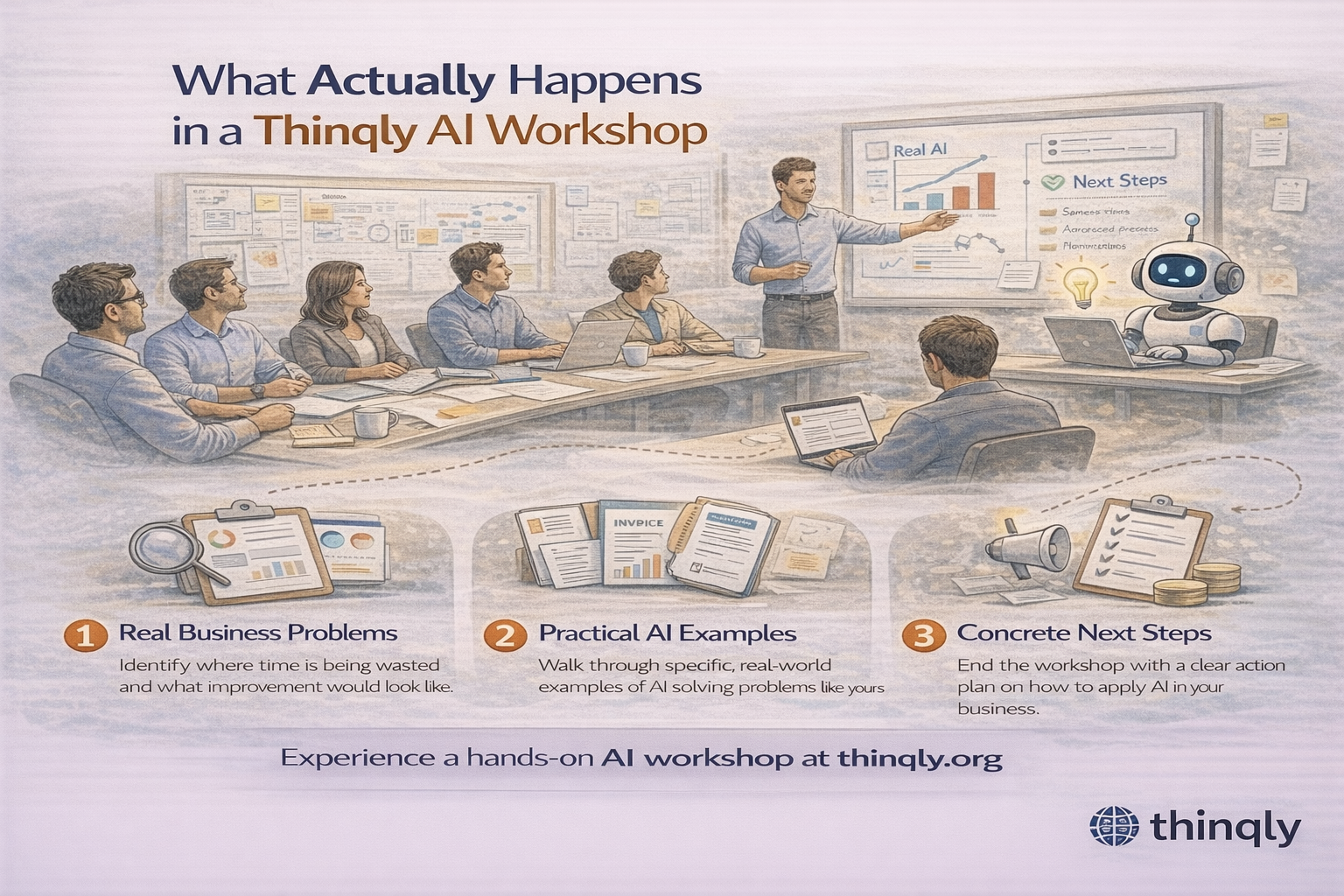
Or join one of our Free AI Workshops and see exactly how this works in practice, with real business examples and no technical background required.
The cost of doing nothing is already adding up. The question is how much longer it makes sense to pay it.
Thinqly is a practical AI partner for founders, operators, and SMB teams. We help you understand, adopt, and apply AI to the problems that actually matter in your business.